[Eat Nico] How about the traditional taste of a century-old Chinese dessert (Chinese pastry) from a long-established shop? FUNG WONG at China Town
Let’s go eat!!!
This time, we’ll introduce a century-old Chinese dessert shop located in Kuala Lumpur’s Chinatown 🥮🍵🥮🍵🥮🍵
Have you ever tried Chinese desserts (Chinese pastries)? I sometimes enjoy them for breakfast! 😋
I used to eat it without giving it a second thought, but it turns out Chinese desserts are a traditional food with a long-standing history.
This shop is located in Chinatown, close to the station and super easy to get to—perfect for a casual tea session with friends! It’s affordable, delicious, and lets you enjoy some truly Malaysian treats. I highly recommend it! 😄 If I have guests coming from Japan, I’d definitely bring them here!
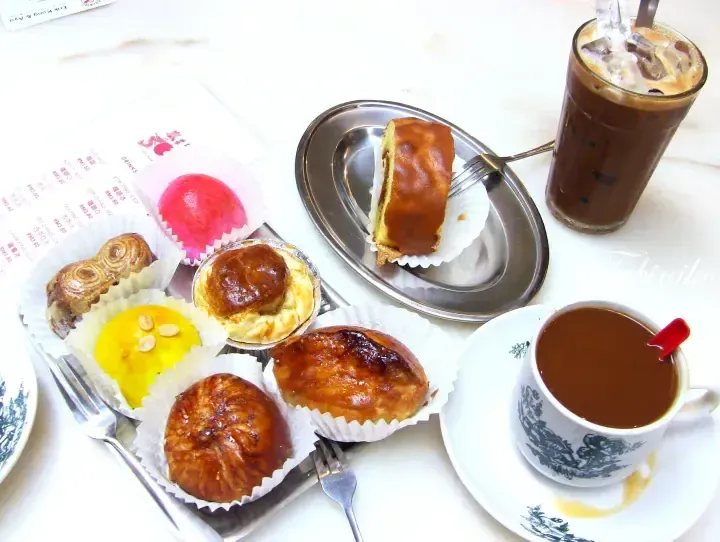
The colorful Chinese desserts we ordered this time ☕🧋☕🧋
The plate on the left, clockwise from the top:
LOTUS PASTE PASTRY RM3 (pink-colored) explained below
SALTED EGG LOTUS PASTRY RM3.5 This pastry features a two-layered structure: the top layer boasts a crispy Shanghai-style crust, while the bottom layer is a flaky tart shell. Inside, you’ll find a sweet lotus seed paste filling paired with a salted egg yolk (the same kind used in mooncakes). It’s incredibly easy to eat and absolutely delicious. I personally find the salted egg yolks in traditional mooncakes to be a bit too intense and not to my taste—I know many Japanese people feel the same way. However, this version had no overpowering “funk” at all, and it was truly delicious.
PIGGY BUN RM3.5 Filled with char siu, this pastry features multiple layers of flaky, pie-like dough that is crispy and delicious!
The round, brown snack below—I forgot to note down its product name. It has the same filling as the PIGGY BUN, but the wrapping style of the dough is different.
CENTURY EGG PASTRY RM3.5 Explained below
READ BEAN ROLL RM3 See explanation below
The other plate has a roll cake.
The photo might be a bit hard to see, but there’s kaya sandwiched in between.
Beverages
CHAM PING (ICED) RM3.8
Down CHAM (HOT) RM3.6
It’s a Hong Kong-style brew, with 50% coffee and 50% black tea. The exact ratio varies from shop to shop.
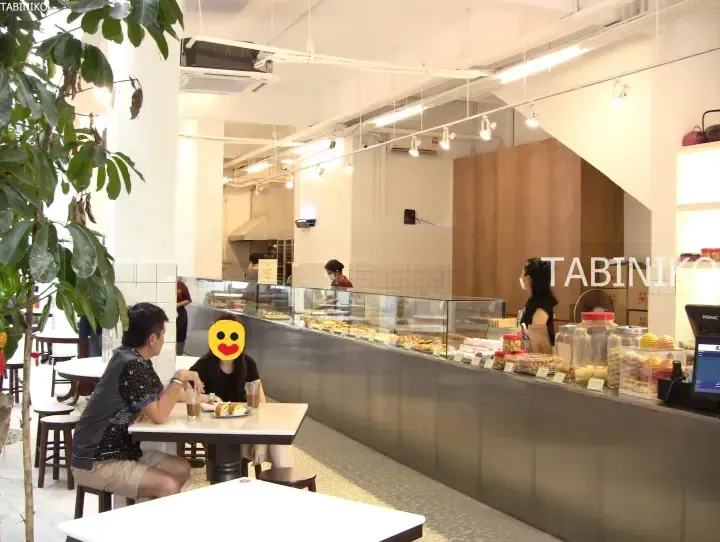
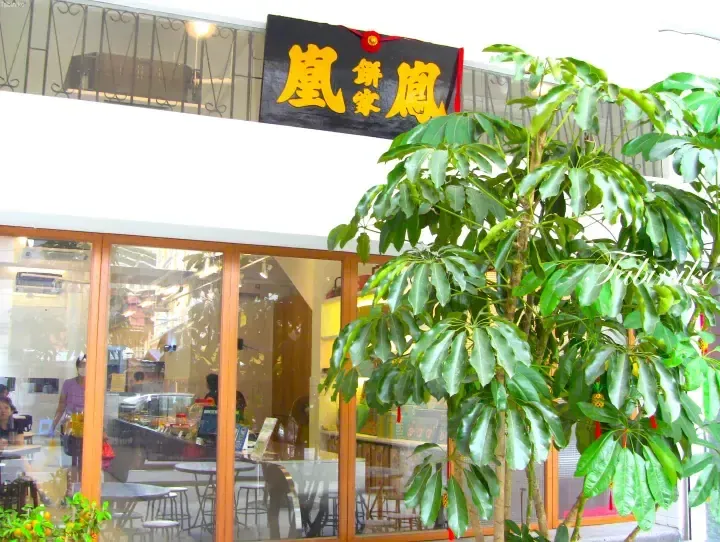
This Phoenix restaurant has been a fixture in Chinatown for years, but it recently relocated to a new spot within the district, underwent renovations, and officially reopened last December. Apparently, it was quite a struggle to finally open its doors due to the MCO restrictions. But we’re so glad it’s finally up and running! 😄
The interior exudes a clean, modern vibe, with an open kitchen at the back. There’s an outdoor section inside the shop, fitted with a transparent roof so you can enjoy the space even when it rains. On sunny days, sunlight streams right into the shop. The owner designed it as a semi-outdoor space so that guests can still feel connected to the outside environment while dining. Mango and mangosteen trees have been planted both inside and in front of the shop, and they’re growing little by little. It’s a wonderful concept: as the trees grow, so does the shop, passing down its traditions to future generations. They aren’t bearing fruit just yet, but who knows—maybe they will someday? I’m looking forward to it! 😄👍 When they do bear fruit, the scenery will surely look completely different.
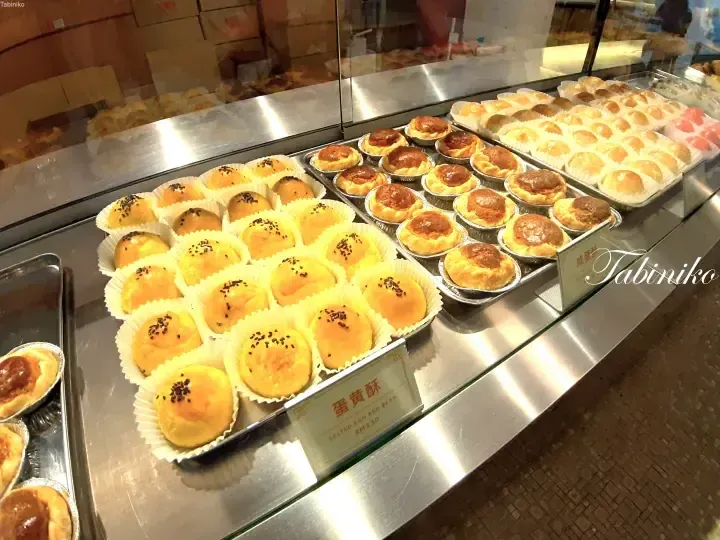
The glass display case is brimming with Chinese desserts 🥮🍵🥮🍵🥮🍵 If you visit early, the case is packed with traditional pastries 😋 Just looking at them sparks excitement and fills the heart with joy~🤩🤩🤩
The dessert from FUNG WONG, featured here, originated in Guangzhou and boasts a tradition of over 100 years in both flavor and preparation. We enjoyed this delicious treat while listening to a precious story from Simon, one of the owners. 😄
This shop was established in 1909, during the era when Malaysia was a British colony. British residents stationed there craved sponge rolls, so they crafted their own versions using locally available ingredients. That’s the origin of the roll cake seen in the first photo. While modern sponge rolls are typically filled with whipped cream, such a luxury wasn’t available at the time. Instead, they used kaya—a rich spread made from coconut milk and eggs—as the filling.
I imagined the past while savoring the flavors. It’s truly profound. Many Chinese dessert shops close down because they struggle to sustain their business, but Fung Wong remains dedicated to preserving the taste and craftsmanship for future generations, preparing each dish with meticulous care. I sincerely hope this tradition continues to be passed down without interruption.
Here are my top 3 favorites from what I ordered this time! 🤩👍
Number 3 is this↓↓↓
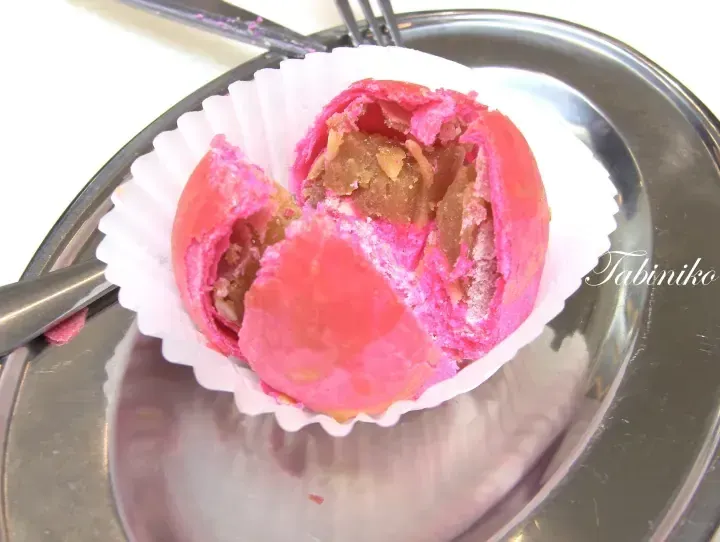
Product Name: LOTUS PASTE PASTRY RM3
Inside, you’ll find a delicate lotus seed paste (made from white lotus seeds) and a sunflower seed paste, offering an elegant aroma and flavor that’s sweet and delicious 😋👍😋👍😋👍. These pastes are commonly used in Chinese sweets like mooncakes. Think of them as similar to “anko” (sweet red bean paste) in Japanese wagashi!
The second place goes to this↓↓↓
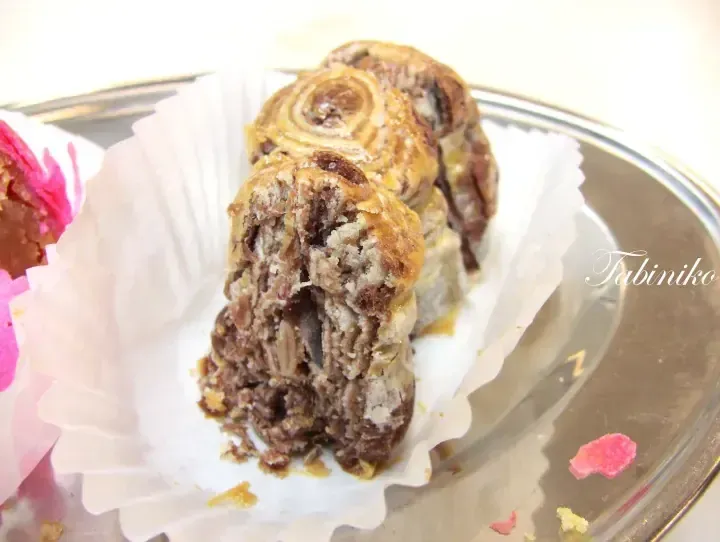
Product Name: READ BEAN ROLL RM3
A sweet treat with red bean paste sandwiched between multiple layers of pastry. Reading the name “Bean Roll,” you might imagine the dough being stretched out long, topped with red bean paste, and then rolled up into a spiral, right? Well, it turns out that’s exactly how it’s made! This is a labor-intensive process, and Fung Wong continues to uphold this traditional method despite the effort required. As such, fewer places are still making it this way—this shop might even be the only one left. But the extra effort really pays off in taste!
The No. 1 spot goes to this↓↓↓
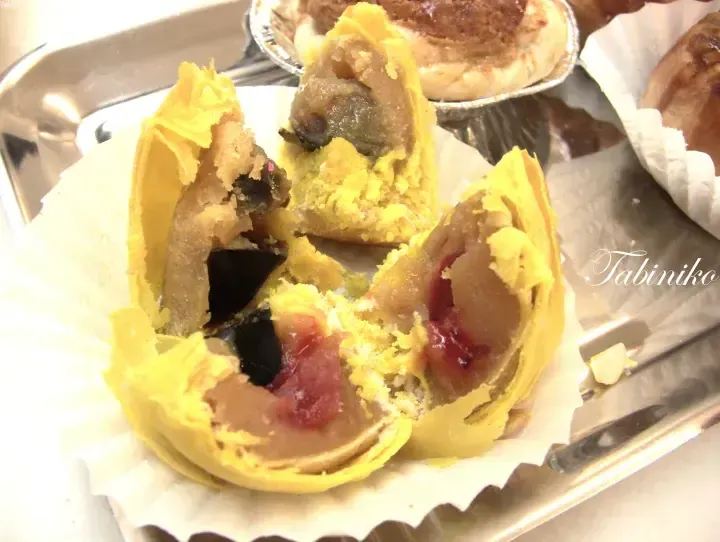
Product Name: CENTURY EGG PASTRY RM3.5
For me, this was hands down the number one pick!!! My husband and the friends who joined us all agreed—it was their top choice too!
This filling contains lotus seed paste, sunflower seed paste, and surprisingly, century egg and ginger 😮😮😮 You might be thinking, “Will Japanese palates really enjoy this?”—and while that’s probably what every Japanese person would wonder, the combination is surprisingly perfect and absolutely delicious!!!
I’d highly recommend this as one of the must-try foods when you visit Malaysia 🤩😋🤩😋 I’m not sure how else to express it, but the century egg (pidan) was perfectly balanced—not overpowering—with a subtle ginger aroma that pleasantly lingered. It was truly delicious, so I definitely bought some to bring home as souvenirs.
You can dine in or take away from this shop!!
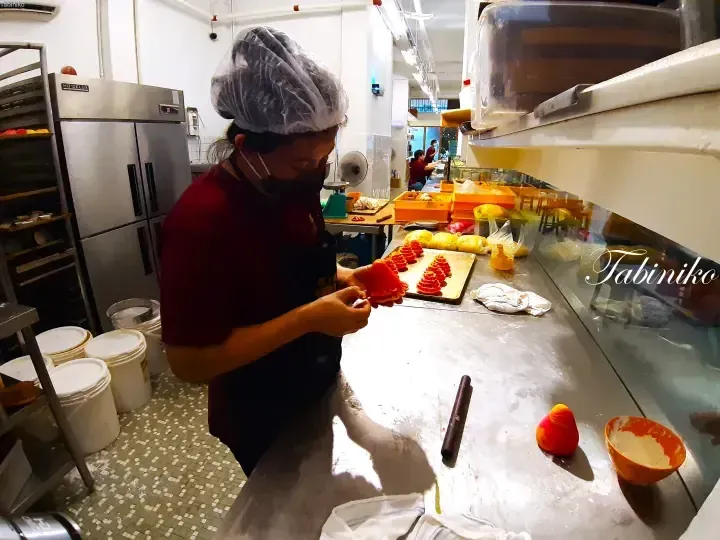
In the open kitchen at the back of the store, the staff were carefully crafting each dish with heartfelt care.
This is where they’re preparing offerings for the gods associated with marriage.
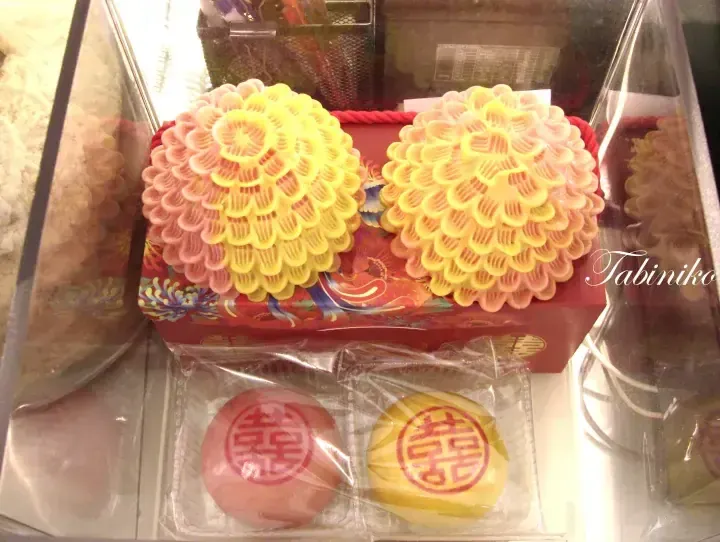
These are the sweets used for weddings. The items on top are offerings to the gods (not for eating), while the steamed buns-like treats on the bottom are prepared by the groom’s side. It’s said that they distribute these buns along with money to the guests who come as matchmakers or representatives. In the past, they used to receive orders for around 100 boxes a day, but now it’s down to about 20 boxes daily. I had my wedding in Malaysia, and these weren’t present at all. My husband said it was the first time he’d ever seen them 😮 We both learned for the first time that such a custom exists.
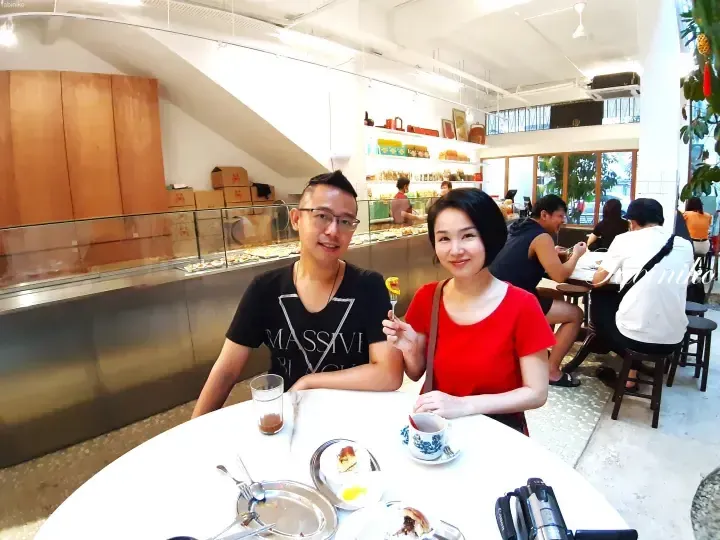
Any unsold desserts are donated to nursing homes. It’s wonderful to contribute to society by ensuring nothing goes to waste!
My stomach and heart were both satisfied—what a thoroughly fulfilling culinary journey! 🍛🍜🍚🍛🍜🍚
Our culinary journey—Tabeniko!—will continue! 🤩🤩🤩
When placing your order at the store, be sure to check out the Tabiniko blog and refer to the photos to help you decide!
Website: This shop doesn’t have its own website, so please check their Facebook page instead.
https://www.facebook.com/FungWongBiscuits/?ti=as
You can find it by searching for “Fung Wong” on Facebook.
Store Name: Fung Wong
Contact: [email protected]
Address: 85, Jalan Sultan 50000 Kuala Lumpur
📍Google Map: